
Genes Reunited Blog
Welcome to the new Genes Reunited blog!
- We regularly add blogs covering a variety of topics. You can add your own comments at the bottom.
- The Genes Reunited Team will be writing blogs and keeping you up to date with changes happening on the site.
- In the future we hope to have guest bloggers that will be able to give you tips and advice as to how to trace your family history.
- The blogs will have various privacy settings, so that you can choose who you share your blog with.
Official Blogs
Electoral Rolls
Looking for living relatives?
Search our UK Electoral Rolls (2002-2013) and find your living relatives today.

The British Newspaper Archive
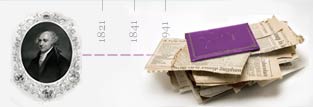
Read about historical events at the time they were happening. Perhaps you'll discover your ancestor in their local newspaper?
New Military Records
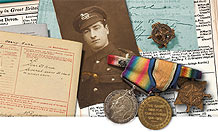
Was your ancestor a war hero?
View thousands of brand new military records, including Chelsea Pensioner records, Military Nurses, Prisoners of war and much more.
Gift subscriptions

Do you know someone interested in discovering their family history?
You can now buy a gift subscription to Genes Reunited so they can research their family tree.
Find My Past: Shot at Dawn – 1st December 2011
During World War One, 306 British Soldiers were sentenced to death for cowardice or desertion. These men were taken out, tied to a post, and shot at dawn by their own side. Today it is believed that many of them were suffering from shell shock and in 2006 all of them were officially pardoned by the Government.
This week's episode of Find My Past looks into the lives of three men who all served in WW1. We meet descendants of Harry Thomas Farr, Sergeant Major Herbert Laking and Field Marshal Douglas Haig.
Lizzie discovers that she is the great granddaughter of Harry Farr. Harry was part of a regiment lead by Sergeant Major Laking, who is the grand uncle of David.
Harry Farr and Herbert Laking took part in some terrifying battles. On 10th March 1915 they were both in France and part of an assembly of 400 guns that fired constantly at the Germans for 35 minutes. In this time more shells were fired than throughout the entire Boer War!
We also meet Peter Johnson. Peter is the grandson of Douglas Haig, the man responsible for the largest Army Britain has ever seen. He had to manage and command an army of more than 2 million men and make judgement calls on how to discipline and organise the army.
On 1st July to 18th November 1916, the Battle of the Somme raged. During this time there were over 1 million casualties and no major advancement. Harry Farr had been on sick leave from the army suffering with nerves, but was sent back and was under the command of Herbert Laking. Harry would have heard of the horrors of the Somme and would have been understandably terrified.
Harry Farr reported sick and was sent to the hospital, but with no obvious sign of injury and thousands of other serious casualties, he was sent back to his regiment. He continued to claim he was sick and refused to take part in the attack being planned. Laking was forced to have Harry arrested and in documented conversations is recorded to have called Harry a coward.
At this point we have to wonder what the options were for both men. Laking is trying to control a regiment of terrified men under constant fire living in unbearable conditions. He needs to keep morale high and discipline instilled. Harry is understandably terrified and possibly suffering from shell shock. Shell shock was not widely understood at this point in history and only a total breakdown would make you unfit for service. When questioned by a Senior Officer, Harry says he felt well when away from the shell fire. This did not do him any favours. Harry's officer says that he has good character and conduct, but that he loses his nerve under fire and is likely to cause panic with the other men.
Unfortunately, none of Harry's friends came forward to defend Harry. By this point, all of his fellow soldiers had fought in the Battle of the Somme and many had lost friends and comrades. In their eyes, Harry had let them down when they needed him the most and because of this, they stayed silent when they could have spoken out.
Harry's report was sent up the ranks and landed on the desk of Douglas Haig who had the final say on the recommended sentence of death. Haig had commuted 97% of all death penalties sent his was, but unfortunately Harry's was not one of them. Harry was sentenced to death by execution.
Because of the events surrounding Harry's death, his widow was not entitled to a pension. She kept the circumstances of his death a secret from all her family for many years. To be considered a coward when men were giving their lives every day was considered shameful.
All three men focused on in this episode were under unbelievable pressure. Hindsight allows us to look back and judge the decisions made by these men, but we will never fully understand what made them make the decisions that led to the execution of Harry and 305 other men. All in all an emotive and thought provoking episode that covers a topic shrouded in controversy even today.
Find My Past - It's on every Thursday at 9pm on the YeSTERDAY channel - 12 on freeview, 537 on Sky and 203 on Virgin. You can also see it here too - http://www.tvcatchup.com/.
Comments
|
Send Message |
I first became interested in this when a gentleman in Tasmania asked me to visit, if possible, the grave of John Joseph Sweeney, a Tasmanian in the N.Z. army who had been killed in this manner. This was in the days before I was able to keep records on a computer, so I am relying on my memory for his name....it may have been James Joseph Sweeney.
He is buried at Albert in France..but unfortunately I was not able to do this for him. The gentleman had been a friend of John Joseph's parents, and he told me that on hearing the news of his son's death, his father took his own life.. On my next visit to England, I was able to make a pilgrimage to the Arboretum in Staffordshire, and placed flowers beside the post commemorating him, and also beside a nearby post commemorating another N.Z. soldier, To his credit, our Prime Minister of the time, Billy Hughes, refused to allow Australian Army men to be "shot at dawn". I remember reading that a N.Z. member of pariiament who was campaigning for a pardon for all men who had faced this death, had a white feather left on his desk. And the Parish Council of some place in Kent (from memory) had refused a request to have the name of a young soldier victim placed on its War Memorial. In Australia, Parish Council refers to a group which manages local Christian church affairs. I understand in England it refers to a civic organization. It is a pity that we don't have the programme Find Your Past on our TV ...I would very much have appreciated watching the one featuring this subject. Shirley Powley |
|
Send Message |
:-0 thats all i want to say at this horror.
Barbara Jones |
|
Send Message |
We should hang our heads in shame
|
|
Send Message |
I did watch this episode and it was interesting to see Harry Farr's great granddaughter Lizzie come face to face with Haig's grandson Peter Johnson.I thought that Peter didn't really know that much about those times & got the impression he only knew what he'd been told. He tried to be understanding of the situation and almost came close to defending Haig-however I noted that he didn't do so once he realised he was facing a relative of one of the men his grandfather had sentenced to death. David had the attitude that his great Uncle Laking had a job to do that was difficult and though he sympathised with the shell shock victims one had to try & see things from his point of view. Lizzie didn't agree and read out some of the transcripts of what Laking had said about her great grandfather & pointed out that the man knew Harry, that he had suffered from shell shock, and should have done more to help him.
It is easy to judge from the vantage point of hindsight and difficult not to judge these men as though they were living in this day and age where things would probably have been done differently. However, it doesn't make it right that so many were shot for cowardice when in fact they were ill. Nor does saying that shell shock was an unknown affliction in those days. There were plenty of doctors in this country who saw how it affected those men because they saw so much of it and the military really should have taken more notice as more and more soldiers came home from the front and after the war suffering from that very 'unknown affliction'. I had a great uncle who joined up in 1914 and was killed in Belgium in March 1917, having come through the horrors of the Somme. Even before I knew the full details of my relative's war record, I had long felt that after the war ended Haig should not have been brought home, given an Earldom & a country estate plus one hundred thousand pounds, from a 'grateful nation' as the saying goes. It is just my opinion that I have formed after studying the First World War but I feel we had at the head of the army a man who did not understand the complexities of that war, until it was too late, and that he was the wrong person to be in charge. I am sure there was pressure on him but what about the men under his command, out there in the trenches? I don't hold with the attitude either that it was war therefore loss of life is expected-more like it was accepted as inevitable. It did not have to be that way-the first few days of the Somme proved that and that new tactics and ideas were needed. Instead it went on for four months and nothing was achieved by it, except so many deaths. At the very least he should have been investigated for his actions over the Somme, and then later with Ypres. It never happened and it took 92 years, after refusals from successive governments and the the British Army, to pardon those men. 92 years to admit they were wrong to treat British and Commomwealth soldiers in such a way. One of my contemporaries once said to me that Haig should have been shot for mass murder. It certainly would have been a fitting requiem for the 306 men he labelled as cowards. |